$16.43
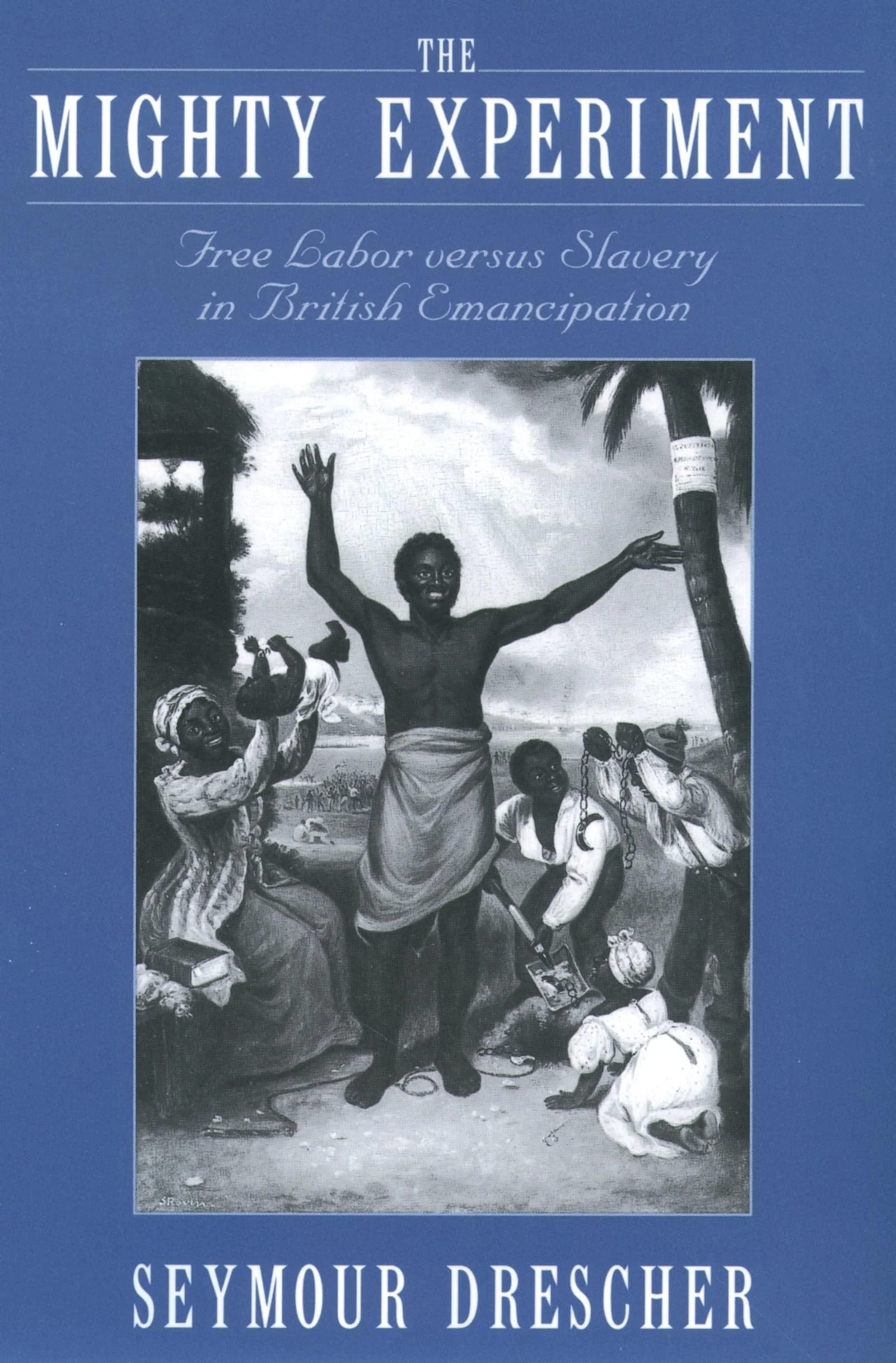
The Mighty Experiment: Free Labor versus Slavery in British Emancipation—
$16.43
The Story
By the mid-eighteenth century, the transatlantic slave trade was considered to be a necessary and stabilizing factor in the capitalist economies of Europe and the expanding Americas. Britain was the most influential power in this system which seemed to have the potential for unbounded growth. In 1833, the British empire became the first to liberate its slaves and then to become a driving force toward global emancipation. There has been endless debate over the reasons behind this decision. This has been portrayed on the one hand as a rational disinvestment in a foundering overseas system, and on the other as the most expensive per capita expenditure for colonial reform in modern history.
In this work, Seymour Drescher argues that the plan to end British slavery, rather than being a timely escape from a failing system, was, on the contrary, the crucial element in the greatest humanitarian achievement of all time. The Mighty Experiment explores how politicians, colonial bureaucrats, pamphleteers, and scholars taking anti-slavery positions validated their claims through rational scientific arguments going beyond moral and polemical rhetoric, and how the infiltration of the social sciences into this political debate was designed to minimize agitation on both sides and provide common ground. Those at the inception of the social sciences, such as Adam Smith and Thomas Malthus, helped to develop these tools to create an argument that touched on issues of demography, racism, and political economy. By the time British emancipation became legislation, it was being treated as a massive social experiment, whose designs, many thought, had the potential to change the world.
This study outlines the relationship of economic growth to moral issues in regard to slavery, and will appeal to scholars of British history, nineteenth century imperial history, the history of slavery, and those interested in the history of human rights.
The Mighty Experiment was the winner of First Prize, Frederick Douglass Book Prize, Gilder Lehrman Center for the Study of Slavery, Resistance, and Abolition.
ASIN: 0195176294
VSKU: BVV.0195176294.G
Condition: Good
Author/Artist:Drescher, Seymour
Binding: Paperback
Note: Any images shown are stock photographs and product may differ from what is shown.
Condition Notes: The item shows wear from consistent use, but it remains in good condition and works perfectly. All pages and cover are intact including the dust cover, if applicable . Spine may show signs of wear. Pages may include limited notes and highlighting. May NOT include discs, access code or other supplemental materials.
ASIN: 0195176294
VSKU: BVV.0195176294.G
Condition: Good
Author/Artist:Drescher, Seymour
Binding: Paperback
Note: Any images shown are stock photographs and product may differ from what is shown.
Condition Notes: The item shows wear from consistent use, but it remains in good condition and works perfectly. All pages and cover are intact including the dust cover, if applicable . Spine may show signs of wear. Pages may include limited notes and highlighting. May NOT include discs, access code or other supplemental materials.
Description
By the mid-eighteenth century, the transatlantic slave trade was considered to be a necessary and stabilizing factor in the capitalist economies of Europe and the expanding Americas. Britain was the most influential power in this system which seemed to have the potential for unbounded growth. In 1833, the British empire became the first to liberate its slaves and then to become a driving force toward global emancipation. There has been endless debate over the reasons behind this decision. This has been portrayed on the one hand as a rational disinvestment in a foundering overseas system, and on the other as the most expensive per capita expenditure for colonial reform in modern history.
In this work, Seymour Drescher argues that the plan to end British slavery, rather than being a timely escape from a failing system, was, on the contrary, the crucial element in the greatest humanitarian achievement of all time. The Mighty Experiment explores how politicians, colonial bureaucrats, pamphleteers, and scholars taking anti-slavery positions validated their claims through rational scientific arguments going beyond moral and polemical rhetoric, and how the infiltration of the social sciences into this political debate was designed to minimize agitation on both sides and provide common ground. Those at the inception of the social sciences, such as Adam Smith and Thomas Malthus, helped to develop these tools to create an argument that touched on issues of demography, racism, and political economy. By the time British emancipation became legislation, it was being treated as a massive social experiment, whose designs, many thought, had the potential to change the world.
This study outlines the relationship of economic growth to moral issues in regard to slavery, and will appeal to scholars of British history, nineteenth century imperial history, the history of slavery, and those interested in the history of human rights.
The Mighty Experiment was the winner of First Prize, Frederick Douglass Book Prize, Gilder Lehrman Center for the Study of Slavery, Resistance, and Abolition.
ASIN: 0195176294
VSKU: BVV.0195176294.G
Condition: Good
Author/Artist:Drescher, Seymour
Binding: Paperback
Note: Any images shown are stock photographs and product may differ from what is shown.
Condition Notes: The item shows wear from consistent use, but it remains in good condition and works perfectly. All pages and cover are intact including the dust cover, if applicable . Spine may show signs of wear. Pages may include limited notes and highlighting. May NOT include discs, access code or other supplemental materials.
ASIN: 0195176294
VSKU: BVV.0195176294.G
Condition: Good
Author/Artist:Drescher, Seymour
Binding: Paperback
Note: Any images shown are stock photographs and product may differ from what is shown.
Condition Notes: The item shows wear from consistent use, but it remains in good condition and works perfectly. All pages and cover are intact including the dust cover, if applicable . Spine may show signs of wear. Pages may include limited notes and highlighting. May NOT include discs, access code or other supplemental materials.