$29.99
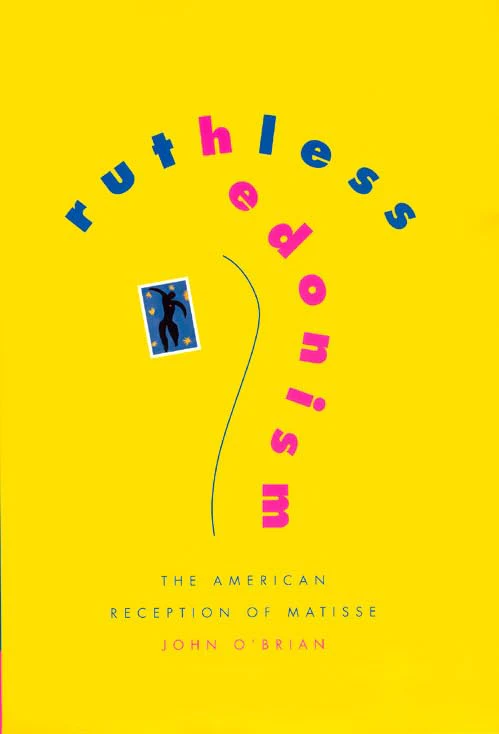
Ruthless Hedonism: The American Reception of Matisse—
$29.99
The Story
"Oh, do tell the American people that I am a normal man; that I am a devoted husband and father, that I have three fine children, that I go to the theatre." These words were spoken by Matisse just before the Armory Show in 1913—a pivotal moment, after which his work was seen in America as an example of what should be admired or deplored in modern art.
In this ambitious study, John O'Brian argues that Matisse's sober presentations of himself were calculated to fit with the social constraints and ideological demands of the times. Matisse's strategy included cooperating with museums, cultivating private collectors, playing off dealers one against another, and reassuring the media that, whatever his reputation as an avant-gardist, the conduct of his life was solidly bourgeois.
Moving from the late 1920s, when Matisse's output was shedding its outlaw reputation, to the early 1950s, when his work was canonized, O'Brian shows how the way Matisse's work was viewed changed as attention shifted away from the seductiveness of his subject matter to the seductiveness of his paint. The art's resolute rejection of political concerns, its deployment of decorative design for visual satisfaction, and its representations of pleasure encouraged American audiences, who in the 1930s deemed the art disreputable, to celebrate its gratifications by the early years of the Cold War.
This intriguing, wide-ranging investigation of Matisse's self-promotion, America's uneasy embrace of modernism, and America's consumer culture and politics provides a rich context to Clement Greenberg's words published in the Nation in 1947: "Matisse's cold hedonism and ruthless exclusion of everything but the concrete, immediate sensation will in the future, once we are away from the present Zeitgeist, be better understood as the most profound mood of the first half of the twentieth century."
ASIN: 0226616266
VSKU: BVV.0226616266.G
Condition: Good
Author/Artist:O'Brian, John
Binding: Hardcover
Note: Any images shown are stock photographs and product may differ from what is shown.
Condition Notes: Former library book with the usual stamps, stickers and labels. The item shows wear from consistent use, but it remains in good condition and works perfectly. All pages and cover are intact including the dust cover, if applicable . Spine may show signs of wear. Pages may include limited notes and highlighting. May NOT include discs, access code or other supplemental materials.
ASIN: 0226616266
VSKU: BVV.0226616266.G
Condition: Good
Author/Artist:O'Brian, John
Binding: Hardcover
Note: Any images shown are stock photographs and product may differ from what is shown.
Condition Notes: Former library book with the usual stamps, stickers and labels. The item shows wear from consistent use, but it remains in good condition and works perfectly. All pages and cover are intact including the dust cover, if applicable . Spine may show signs of wear. Pages may include limited notes and highlighting. May NOT include discs, access code or other supplemental materials.
Description
"Oh, do tell the American people that I am a normal man; that I am a devoted husband and father, that I have three fine children, that I go to the theatre." These words were spoken by Matisse just before the Armory Show in 1913—a pivotal moment, after which his work was seen in America as an example of what should be admired or deplored in modern art.
In this ambitious study, John O'Brian argues that Matisse's sober presentations of himself were calculated to fit with the social constraints and ideological demands of the times. Matisse's strategy included cooperating with museums, cultivating private collectors, playing off dealers one against another, and reassuring the media that, whatever his reputation as an avant-gardist, the conduct of his life was solidly bourgeois.
Moving from the late 1920s, when Matisse's output was shedding its outlaw reputation, to the early 1950s, when his work was canonized, O'Brian shows how the way Matisse's work was viewed changed as attention shifted away from the seductiveness of his subject matter to the seductiveness of his paint. The art's resolute rejection of political concerns, its deployment of decorative design for visual satisfaction, and its representations of pleasure encouraged American audiences, who in the 1930s deemed the art disreputable, to celebrate its gratifications by the early years of the Cold War.
This intriguing, wide-ranging investigation of Matisse's self-promotion, America's uneasy embrace of modernism, and America's consumer culture and politics provides a rich context to Clement Greenberg's words published in the Nation in 1947: "Matisse's cold hedonism and ruthless exclusion of everything but the concrete, immediate sensation will in the future, once we are away from the present Zeitgeist, be better understood as the most profound mood of the first half of the twentieth century."
ASIN: 0226616266
VSKU: BVV.0226616266.G
Condition: Good
Author/Artist:O'Brian, John
Binding: Hardcover
Note: Any images shown are stock photographs and product may differ from what is shown.
Condition Notes: Former library book with the usual stamps, stickers and labels. The item shows wear from consistent use, but it remains in good condition and works perfectly. All pages and cover are intact including the dust cover, if applicable . Spine may show signs of wear. Pages may include limited notes and highlighting. May NOT include discs, access code or other supplemental materials.
ASIN: 0226616266
VSKU: BVV.0226616266.G
Condition: Good
Author/Artist:O'Brian, John
Binding: Hardcover
Note: Any images shown are stock photographs and product may differ from what is shown.
Condition Notes: Former library book with the usual stamps, stickers and labels. The item shows wear from consistent use, but it remains in good condition and works perfectly. All pages and cover are intact including the dust cover, if applicable . Spine may show signs of wear. Pages may include limited notes and highlighting. May NOT include discs, access code or other supplemental materials.